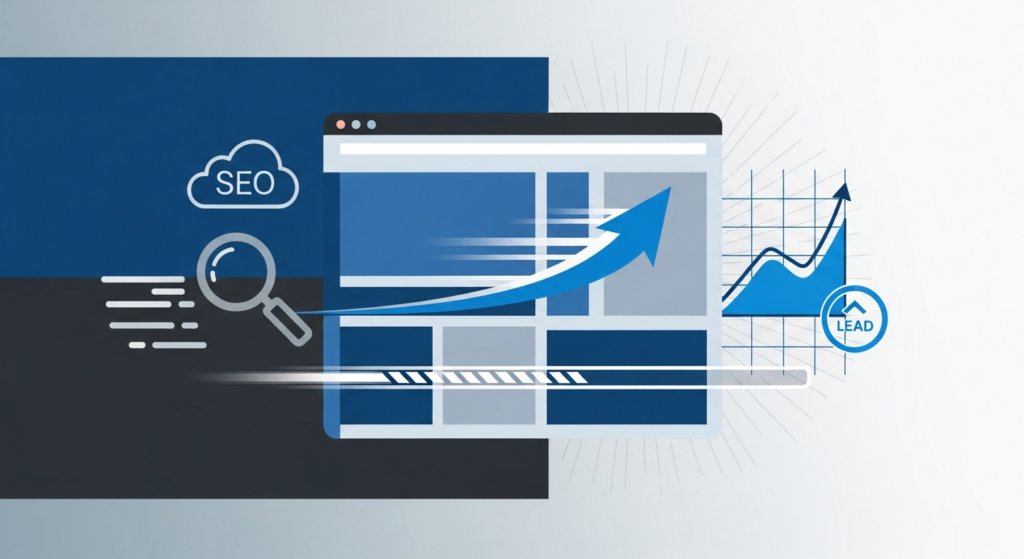
When a potential customer lands on your website, every second counts. Page speed affects how long people stay, whether they contact you, and how search engines rank your pages. Improving load time is not just a technical exercise — it’s a practical business step that helps generate leads, build trust, and protect your online visibility.
Faster pages keep visitors engaged
Visitors expect sites to load quickly on both desktop and mobile. Slow pages create friction: users abandon tasks, miss calls-to-action, and move on to competitors. That lost attention directly reduces the number of leads your site produces.
Simple performance improvements — like optimizing images, enabling browser caching, and trimming large third-party scripts — reduce wait time and help visitors reach conversion points. Each fraction of a second saved lowers the chance a visitor leaves before they contact you.
Speed influences first impressions and trust
Website speed shapes how people judge your business. A fast, responsive site feels professional and reliable. A slow site can make your company seem outdated or poorly managed, even if your service or product is excellent.
Trust matters especially for small businesses and service providers. People prefer clear, simple interactions. When a site responds promptly, visitors are more likely to read content, call your phone number, or submit a contact form. Performance is part of the user experience that builds confidence.
Search visibility and performance are connected
Search engines aim to send users to useful, usable pages. While algorithms consider many factors, page experience and performance affect how search engines evaluate a page. A faster site is more likely to retain visitors and complete useful actions, signals that support visibility in search results.
Improving speed can help with ranking stability and click-through performance, especially on mobile where user patience is lower. Even modest improvements in load time can help your pages compete better for local and topic-based queries.
Which speed metrics matter for business outcomes
Not all performance numbers are equally useful. Focus on measurements that reflect what real users experience:
- Largest Contentful Paint (LCP) — When the main content appears. Faster LCP helps visitors see meaningful content sooner.
- First Input Delay (FID) or Interaction to Next Paint — How quickly the page responds to the first user interaction.
- Cumulative Layout Shift (CLS) — Visual stability during loading. A stable page feels more polished and trustworthy.
These metrics connect directly to user perception and behavior. Improving them tends to reduce abandonment and increase the chance a visitor becomes a lead.
Common, high-impact improvements
Start with the practical fixes that most often deliver clear results:
- Optimize images — Use appropriately sized images, compressed formats, and modern image delivery when possible.
- Lazy-load offscreen content — Load images and nonessential assets only when users need them.
- Reduce render-blocking resources — Defer or inline critical CSS and delay noncritical JavaScript.
- Use caching and a CDN — Serve static files from nearby edge servers and enable browser caching for repeat visitors.
- Audit third-party scripts — Remove or defer analytics, widgets, and tracking that slow initial rendering.
These steps are practical to implement and often don’t require a full site rebuild. They target the main causes of slow pages and deliver measurable improvement in user experience.
How speed improvements turn into more leads
Faster pages reduce friction in the user journey. When forms load quickly, contact buttons appear immediately, and pages feel responsive, visitors complete actions at higher rates. That means more phone calls, form submissions, and quote requests without changing your messaging or design.
Speed work also supports your other marketing channels. Paid advertising, local search listings, and social referrals perform better when they lead to a fast landing page. Improving page speed protects the value of the traffic you already pay for or earn organically.
Measuring progress without guesswork
Use a mix of lab and field data when you measure performance. Lab tools (like Lighthouse) help identify technical issues and offer prioritized fixes. Field data (real user metrics) shows how your actual visitors experience the site across devices and networks.
Track both technical metrics and business signals such as contact form completions and phone calls. That ties performance work back to the metric that matters most: actual leads.
When to plan deeper performance work
Some sites need more than quick fixes. If your site relies on heavy custom features, complex integrations, or serves a wide audience on slow networks, plan a staged performance project. That typically includes a discovery audit, prioritized roadmap, and targeted engineering work to improve architecture and asset delivery.
Deeper work is an investment in stability and future growth. It reduces maintenance overhead, improves reliability, and makes the site easier to update without reintroducing regressions.
Practical next steps you can take today
- Run a quick performance audit with a lab tool and collect field data for a week.
- Fix low-effort, high-impact items: image sizes, caching, and blocking JavaScript.
- Monitor contact and conversion metrics to see the business impact.
- Plan a roadmap for larger changes if you rely on complex site features.
Final perspective
Website speed is a clear lever you can use to improve leads, trust, and search visibility. The best approach balances quick wins with a plan for longer-term stability. Small, focused changes often deliver measurable benefits without requiring a full redesign.
If your site feels slow or you’re unsure where to start, a practical audit and prioritized plan will show which changes matter most for your business goals.
If you want help improving your site’s speed, stability, or lead flow, contact Hess WebTech to discuss practical next steps and a simple plan.